
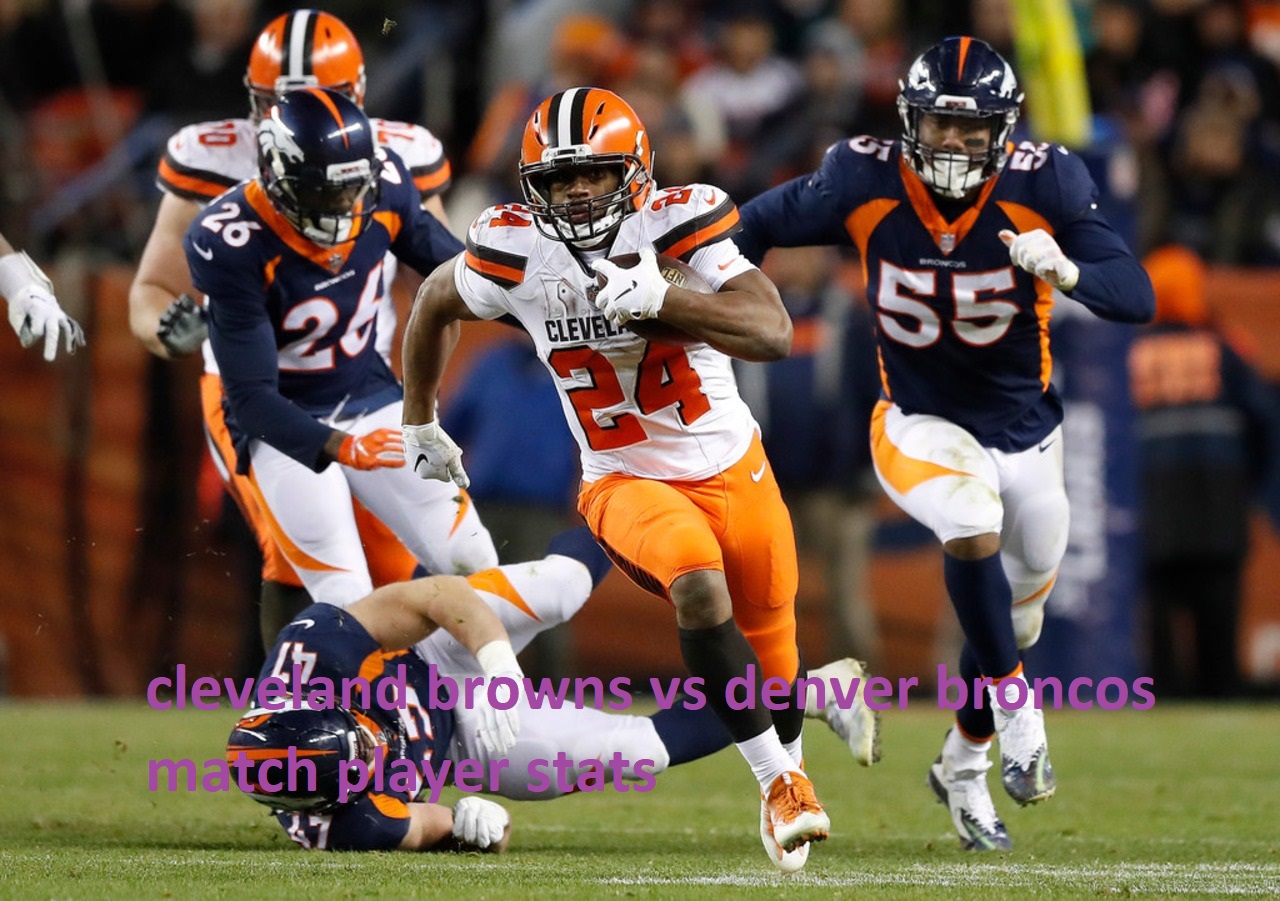
The clash between the Cleveland Browns and the Denver Broncos always brings intensity, physical football, and a fascinating mix of strategy and individual brilliance. When fans search for “Cleveland Browns vs Denver Broncos match player stats,” they’re usually looking beyond the final score—they want to understand who actually made the difference on the field.
In this article, we’ll break down player performances in detail, analyzing key offensive, defensive, and special teams contributions. The goal isn’t just to list stats, but to explain what they mean and how they shaped the outcome of the game.
Quarterback Performance Breakdown
Quarterbacks are always under the spotlight, and this matchup was no exception. For the Browns, the performance of Deshaun Watson (or whoever started in a specific game scenario) typically defines the offensive rhythm. His passing accuracy, decision-making under pressure, and ability to extend plays are crucial metrics that go beyond raw yardage. Even when the stat sheet shows moderate passing yards, efficiency—like completion percentage and third-down conversions—tells the real story.
On the Broncos’ side, Russell Wilson often plays a dual-threat role. His ability to combine passing with mobility can stretch defenses thin. In games against a strong defensive unit like Cleveland, his sack avoidance and red-zone execution become especially important. A quarterback rating (QBR) might not always reflect the pressure he faces, but it still gives insight into overall efficiency.
Comparing both quarterbacks, the key difference usually lies in situational performance. Who performed better on third downs? Who avoided turnovers? These factors often outweigh total passing yards. A 250-yard game with two interceptions can be far less impactful than a 200-yard, turnover-free performance.
Running Game Analysis

The running game is where the Browns often establish dominance Cleveland Browns vs Denver Broncos Match Player Stats, thanks largely to Nick Chubb. His rushing stats typically include not just total yards but also yards after contact, which highlight his physical running style. Even when facing stacked defensive fronts, Chubb’s consistency allows Cleveland to control the clock and dictate the tempo.
Denver counters with a committee approach, often featuring backs like Javonte Williams. His explosiveness and ability to break tackles make him a key player, especially in short-yardage and red-zone situations. His stats may not always show massive yardage totals, but his impact is often seen in crucial first downs and sustained drives.
What stands out in this matchup is how each team uses the run differently. Cleveland leans on it as a foundation, while Denver often uses it to complement the passing game. The total rushing yards matter, but so does efficiency—yards per carry and success rate on early downs are better indicators of effectiveness.
Wide Receivers and Passing Targets
Wide receivers play a massive role in shaping the passing game, and both teams bring different strengths to the table. For Cleveland, players like Amari Cooper provide reliability and route precision. His reception stats often reflect his role as a chain-mover, consistently converting key downs.
Denver’s receiving corps, led by talents such as Courtland Sutton, offers a mix of size and athleticism. Sutton’s ability to win contested catches makes him a favorite target in tight coverage, especially in the red zone. His touchdown numbers often carry more weight than total receptions.
When analyzing player stats here, it’s important to look at target share and yards after catch (YAC). A receiver with fewer catches but higher YAC can be just as impactful as one with double-digit receptions. These details reveal how effectively each team is using its weapons.
Defensive Standouts and Key Plays
Defense is often the deciding factor in Browns vs Broncos matchups. Cleveland’s defense, anchored by Myles Garrett, is known for its pass-rushing dominance. Sack totals, quarterback hits, and pressures are key stats that show his influence—even if he doesn’t record a sack, constant pressure can disrupt an entire offense.
Denver’s defense, historically strong, relies on playmakers like Justin Simmons. His interception stats and ability to read the quarterback can swing momentum instantly. Defensive backs like Simmons are often judged by passes defended and turnovers rather than tackles alone.
The most important defensive stats in this matchup are turnovers and third-down stops. A single interception or forced fumble can completely change the game’s direction. That’s why defensive efficiency often matters more than total yardage allowed.
Special Teams Contributions
Special teams are often overlooked, but they can quietly decide games. Field goal accuracy, punt distance, and return yardage all play a role in field position battles. For instance, a kicker converting long-range attempts adds valuable points that offenses might struggle to produce.
Punt and kick returners also contribute hidden yardage. A single big return can flip field position and give the offense a short field to work with. These moments don’t always show up prominently in headlines, but they’re critical in close contests.
Additionally, coverage units must be considered. Limiting return yardage is just as important as generating it. Teams that consistently win the field position battle often have a significant advantage over four quarters.
Key Player Stats Comparison Summary
When comparing player stats from a Cleveland Browns vs Denver Broncos game, the most telling metrics include:
- Quarterback efficiency (completion %, turnovers, QBR)
- Rushing consistency (yards per carry, total attempts)
- Receiving impact (target share, YAC, touchdowns)
- Defensive disruption (sacks, interceptions, pressures)
- Special teams efficiency (field goals, return yards)
Rather than focusing on one standout stat, the overall balance across these categories determines the winner. A team that performs solidly in all areas usually outperforms one that relies heavily on a single unit.
Final Thoughts: What the Stats Really Tell Us
At first glance, player stats might seem like simple numbers, but they tell a deeper story about execution, strategy, and momentum. In a matchup like the Cleveland Browns vs Denver Broncos, success often comes down to discipline, situational awareness, and minimizing mistakes.
The Browns tend to thrive when their running game and defense control the pace, while the Broncos often rely on quarterback creativity and balanced offense. When analyzing stats, it’s important to connect them to game situations—third downs, red zone efficiency, and turnovers are where games are truly decided.
In the end, the numbers don’t just show who played well—they reveal how the game was won.